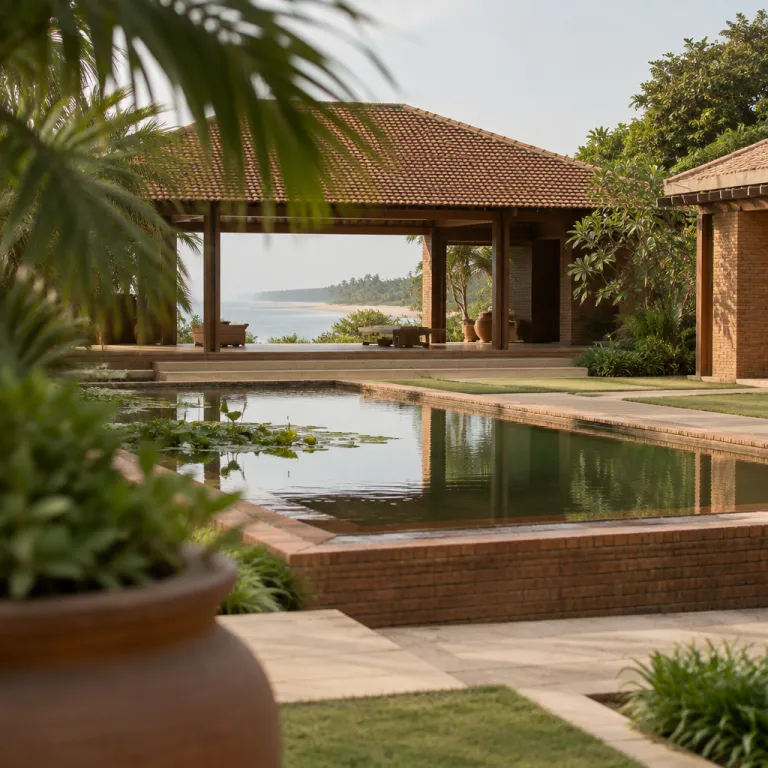
How architect geoffrey bawa shaped luxury travel in sri lanka
To understand luxury hotels in Sri Lanka, you must first understand Geoffrey Bawa. His work as a Sri Lankan architect quietly rewrote how travellers move between house, garden, and sea, and that vision still guides premium hotel design across Sri Lanka. When you book a hotel influenced by Bawa, you are choosing an experience where architecture, interiors, and landscape feel like one continuous, breathing space.
Born into a cosmopolitan family in Colombo in 1919, architect Geoffrey Bawa trained in law before turning to architecture and design in the late 1940s, a shift that gave him a rare sensitivity to both culture and place. He worked closely with collaborators such as Danish architect Ulrik Plesner and artists like Ena de Silva, blending European modernism with Sri Lankan craft traditions in ways that still feel fresh for today’s luxury traveller. When you walk into a Bawa-designed hotel or one inspired by his houses, you sense a refined calm rather than ostentatious display, and that restraint is exactly what many premium guests now seek.
His legacy stretches from private houses in Colombo to major public works such as the Sri Lanka Parliament Building at Sri Jayawardenepura Kotte, completed in 1982, which shows how he could scale intimate ideas to monumental architecture. For travellers, this means that a stay in a Bawa Sri Lanka property often feels both personal and grand, like being welcomed into a thoughtfully curated house rather than a generic resort. As you compare hotels online, recognising the name Geoffrey Bawa or a reference to tropical modernism can be a reliable signal of place-sensitive luxury.
From lunuganga to kandalama hotel: living inside tropical modernism
Many travellers first meet Geoffrey Bawa through Lunuganga, his legendary country estate near Bentota, which he began transforming around 1948. This former rubber plantation became his experimental landscape, where gardens, courtyards, and houses were composed like a series of unfolding scenes for family, friends, and guests. Staying in a hotel shaped by this spirit of tropical modernism means your journey through Sri Lanka becomes a sequence of framed views, shifting light, and carefully choreographed breezes.
At Lunuganga, Bawa designed terraces that step gently towards the lake, with lawns, pavilions, and garden rooms in the spirit of the Ena de Silva House that feel both wild and controlled. The influence of his brother Bevis and the lush grounds of Brief Garden is clear, as both brothers treated gardens as living artworks that extend the architecture rather than decorate it. When you choose a Villa Bentota stay or a refined hotel near Bentota Beach, you are often entering a landscape where this same approach to gardens and interiors still shapes how you move, rest, and look outward.
Far inland, Heritance Kandalama and the wider Kandalama Hotel complex, opened in the mid-1990s, show how Bawa designed large-scale hospitality that still feels intimate and ecological. Here the architecture clings to a rock face, with long corridors opening to views of forest, lake, and distant stupas, giving guests a powerful sense of Sri Lankan terrain. In guest reviews highlighted by Sri Lanka Tourism Development Authority summaries, travellers repeatedly mention the drama of arriving at Kandalama through a cave-like entrance and emerging into open terraces, a detail that demonstrates how Bawa’s tropical modernism can deliver both five-star comfort and a rare closeness to nature.
Colombo houses, interiors, and the quiet luxury of urban sri lanka
While many visitors associate Geoffrey Bawa with coastal villas and resort hotels, his House Colombo projects reveal another side of his talent. In these urban houses, the architect Geoffrey Bawa used courtyards, shaded verandas, and layered interiors to create privacy and calm within the dense fabric of Colombo. For travellers choosing a luxury hotel in the capital, understanding these principles helps you read which properties truly reflect Sri Lankan urban life.
The famous Bawa House in Colombo at 11, 33rd Lane, Colombo 3, now managed by the Geoffrey Bawa Trust, is a sequence of four combined houses that became both home and studio between 1959 and 1970. Here, Bawa designed interiors where art, furniture, and light are orchestrated with the same care as walls and roofs, creating a domestic scale that many premium hotels now emulate in their suites and lounges. When a hotel in Sri Lanka references this house, it often signals a commitment to crafted spaces rather than purely decorative luxury.
Some of the most interesting Colombo hotels echo the Ena de Silva House collaborations, where Sri Lankan architect and artist worked together to integrate murals, batik textiles, and custom furniture. This approach to interiors and architecture means that your room can feel like a curated Sri Lankan house, not an anonymous international space. As you browse options on a luxury booking website, look for mentions of Bawa, Bawa-designed spaces, or partnerships with the Geoffrey Bawa Trust to find hotels that honour this quieter, more personal form of urban luxury.
Coastal icons: villa bentota, bentota beach, and the art of seaside stays
Along the southwest coast, the stretch around Bentota Beach is where many travellers first sleep inside a Geoffrey Bawa vision. Properties such as Villa Bentota and the original Bentota Beach Hotel, completed in 1969, show how Bawa designed seaside retreats that blur the line between house, garden, and ocean. When you book a hotel here, you are often choosing between different interpretations of the same powerful idea, shaped by Sri Lankan light, wind, and tide.
In these coastal houses and hotels, Bawa used long colonnades, open pavilions, and low sloping roofs to create shade and capture breezes, a hallmark of tropical modernism. Rather than sealing guests inside air-conditioned boxes, the architecture and interiors invite you to inhabit verandas, courtyards, and gardens that feel like extensions of your room. In published guest comments and design magazines, visitors frequently recall early-morning walks under these colonnades, listening to the surf while staff quietly prepare breakfast, illustrating how the most memorable moments often happen in these in-between spaces where design, climate, and Sri Lanka’s coastal landscape meet.
The story of Bawa’s coastal work is also a story of collaboration, from early projects with Ulrik Plesner to later refinements supported by the Geoffrey Bawa Trust and a close circle of craftspeople. References to Ena de Silva artworks and the influence of brother Bevis appear in many of these properties, especially in their gardens and art collections. When a hotel along this coast highlights its connection to Bawa Sri Lanka heritage, you can usually expect thoughtful design, layered history, and a strong sense of place rather than generic seaside luxury.
Reading bawa’s legacy when booking a luxury hotel online
For travellers using a premium Sri Lanka booking website, the name Geoffrey Bawa can be a powerful filter. When a hotel describes itself as influenced by a Sri Lankan architect like Bawa, or mentions tropical modernism, it usually signals a focus on climate-responsive architecture and context-driven interiors. This matters because it directly shapes your comfort, from natural ventilation to how views are framed from your bed or terrace.
Look closely at how each hotel presents its design story, especially in relation to houses, gardens, and public spaces. Properties that reference Lunuganga, Heritance Kandalama, the Kandalama Hotel, or the Sri Lanka Parliament Building are often aligning themselves with a lineage of Sri Lankan modernism that values landscape and culture as much as luxury. When you see mentions of the Geoffrey Bawa Trust, collaborations with artists like Ena de Silva, or nods to the Ena de Silva House and House Colombo, you are usually dealing with a property that understands this heritage rather than using the name casually.
Guest narratives can also help you decode how successfully a hotel translates Bawa-designed principles into contemporary hospitality. Detailed reviews that describe how gardens, pools, and interiors feel at different times of day are more useful than generic praise, and this is where curated resources such as guest story driven hotel guides for Sri Lanka become valuable. As you compare options, prioritise hotels where architecture, landscape, and service are described together, because that integrated experience is the clearest sign of a true Geoffrey Bawa influence.
Stories, symbols, and the enduring allure of geoffrey bawa for travellers
Part of the fascination with Geoffrey Bawa among luxury travellers lies in the stories that surround his life and work. Tales of the architect driving his Rolls-Royce between Colombo, Lunuganga, and Bentota, or hosting friends and family in houses that doubled as experimental laboratories, appear in biographies and add a cinematic layer to any stay in a Bawa-related hotel. When you sleep in a room shaped by his ideas, you are stepping into this narrative of Sri Lankan creativity and cosmopolitan modernism.
The relationship between Bawa and his brother Bevis, whose own garden at Brief near Beruwala influenced many of Geoffrey’s gardens, shows how family dynamics can shape national architecture. Their shared love of plants, art, and carefully framed views echoes through properties from Villa Bentota to the Kandalama Hotel, where terraces and pools seem to hover between building and landscape. For travellers, this means that a stay in a Bawa Sri Lanka property often feels like entering a layered family album, where each courtyard and veranda holds traces of conversations, collaborations, and quiet experiments.
Institutions such as the Geoffrey Bawa Trust now help protect this legacy, maintaining key houses in Colombo and Lunuganga while advising on conservation of major works like the Sri Lanka Parliament Building. When a hotel works with the Trust or openly acknowledges its debt to Sri Lankan architect pioneers, it signals respect for both history and craft. As you plan your journey through Sri Lanka, choosing such properties allows you to support the ongoing life of Geoffrey Bawa’s architecture while enjoying some of the country’s most refined and context-rich hospitality.
Key figures and timelines for geoffrey bawa inspired stays
- Heritance Kandalama, often called the Kandalama Hotel, typically operates at high occupancy during peak months, with many guests citing architecture and landscape integration as primary booking reasons according to hotel industry reports and Sri Lanka Tourism Development Authority summaries.
- Lunuganga near Bentota offers a limited number of rooms compared with large hotels, usually under a dozen suites, which creates a more intimate experience but also means travellers should book several months in advance during popular travel periods.
- The Sri Lanka Parliament Building designed by Geoffrey Bawa sits on an artificial island in Kotte and is frequently referenced in architectural literature, including the Geoffrey Bawa Trust’s own publications, as a landmark of tropical modernism in South Asia.
- Coastal areas around Bentota Beach and Villa Bentota form one of Sri Lanka’s most established luxury corridors, with tourism authorities reporting consistently strong demand for design-led properties in this region over the past decade.
- Colombo continues to see new hotels referencing Bawa’s House Colombo and Ena de Silva House aesthetics, reflecting a broader shift in Sri Lankan luxury hospitality towards context-sensitive architecture and interiors.
FAQ about geoffrey bawa and luxury hotels in sri lanka
How does geoffrey bawa influence today’s luxury hotels in sri lanka ?
Many contemporary Sri Lanka hotels borrow from Bawa’s tropical modernism, using courtyards, shaded verandas, and open pavilions to connect interiors with gardens and landscape. This approach creates naturally cooled, visually rich spaces that feel rooted in Sri Lankan climate and culture. When a property highlights Bawa-designed inspiration, you can usually expect thoughtful architecture rather than purely decorative luxury.
Which hotels best reflect geoffrey bawa’s original work ?
Key examples include Heritance Kandalama, the wider Kandalama Hotel complex, and coastal properties around Bentota Beach such as Villa Bentota that trace their lineage to Bawa’s early resort experiments. Lunuganga and the Bawa House Colombo, both linked to the Geoffrey Bawa Trust, offer more intimate experiences of his architecture and gardens. Staying in or visiting these places gives travellers direct insight into how the architect Geoffrey Bawa shaped Sri Lankan hospitality.
What is tropical modernism in the context of sri lankan hotels ?
Tropical modernism is a design approach that adapts modern architecture to hot, humid climates using shade, cross ventilation, and close integration with landscape. In Sri Lanka, Geoffrey Bawa and collaborators like Ulrik Plesner developed this language through houses, public buildings, and hotels that open to gardens, courtyards, and water. For guests, this means spaces that feel both contemporary and deeply connected to place.
How can I identify a hotel genuinely influenced by bawa when booking online ?
Look for detailed descriptions of architecture, interiors, and gardens rather than generic style labels, and note any references to Lunuganga, Heritance Kandalama, the Sri Lanka Parliament Building, or collaborations with the Geoffrey Bawa Trust. Properties that mention specific design features such as courtyards, long verandas, and framed views of landscape are more likely to reflect Bawa’s principles. Guest reviews that describe how these spaces feel at different times of day are another strong indicator.
Is it possible to visit bawa’s own houses during a luxury trip ?
Yes, travellers can usually arrange visits or stays at Lunuganga near Bentota and at the Bawa House in Colombo, both overseen by the Geoffrey Bawa Trust. These houses offer a more personal scale than large hotels, allowing guests to experience how Bawa designed for daily life as well as for hospitality. Combining such visits with nights at Bawa-influenced hotels creates a rich, design-focused itinerary across Sri Lanka.